Tuesday, June 28, 2022

Modernising Old Films

We can make old films look much more modern using AI. This is a great article on the technique used on early 1900s films 

"Using a variety of publicly available algorithms, Shiryaev colorized and sharpened the film to 4K resolution (that’s 3,840 horizontal pixels by 2,160 vertical pixels) and bumped the choppy frame rate up to 60 frames per second, a process known as frame interpolation."

The 2018 film They Shall not Grow old using WW1 footage used similar techniques as described here. But even in 4 years the AI technology has improved hugely. 


Archive historical footage is one thing. But is there a market for films upscaled in the same way? Would the Marx Brothers with realistic colours, smoother motion and sharper faces be watched by more people? I think the great Pathe news footage upscaled could make some great documentaries. The wired article goes into interesting detail about what counts as improvements and what is just being made up of the AI algorithm.

The value of these sorts of changes I am not sure about. The cost of them has been falling rapidly though. Due primarily in the last few years to improvements in the algorithms and hardware.

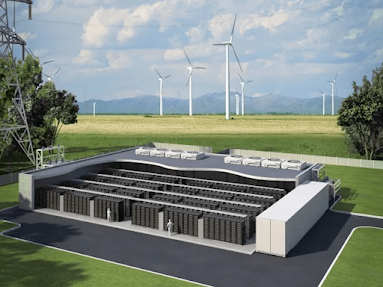
The recent crypto crash has put large numbers of GPU's onto the market cheap. In some cases these are located beside renewable power supplies for cheaper electricity. These tend to be remote locations with not great internet speeds. Old films can be moved around on USB sticks as they are not real time bandwidth dependant. At some point I think the price of Bitcoin will go low enough that a container filled with GPUs currently using, close to free, night time wind energy will have a greater return upscaling old films than mining.

Friday, June 17, 2022

The 15 year global warming pause that didn't happen

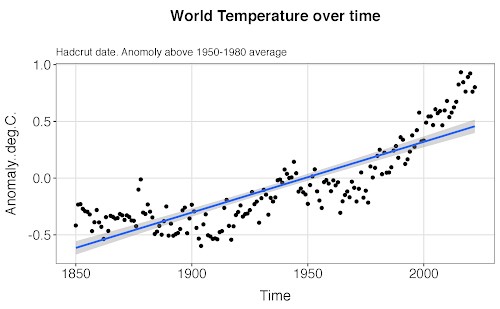
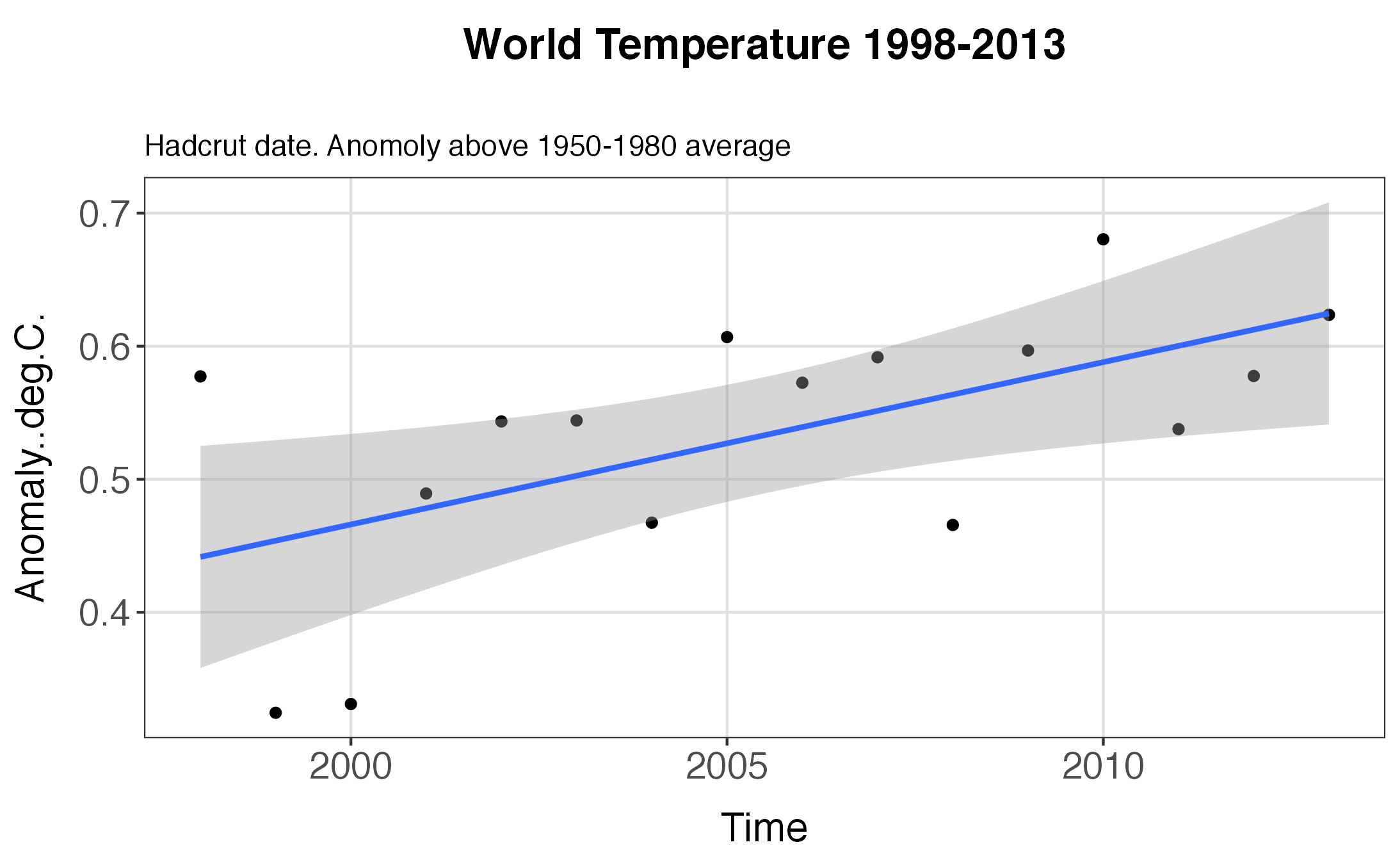
There is a nine year old article that is doing the rounds online. about how there was no increase in global temperature for 15 years


Here is what jumps out at me that is wrong in the article and its current interpretation

1. It is 9 years old. And those posting it don't mention the clear increases since.


2. They don't mention the changes before 1998


3. Or indeed the increase in the 15 years the article says there was no increase

4. "it is expected to address the fact that 1998 was the hottest year on record" 1998 wasn't the hottest year by 2013


You could claim the Hadcrut data, the IPCC use, is flawed in some way that means we should ignore it. But then you can't post the article as it uses Hadcrut data. 
It is weird a 9 year old article has resurfaced and those posting it are only looking at the data for this exact 15 year period. And even then not actually looking at it. The code for these graphs is here

Wednesday, June 08, 2022

Combined Solar and Wind Farms in Ireland

I was talking to a wind energy guy and he expects loads of these wind farms to get solar added soon.

He explained to me 

  • The cost of connecting to the grid is already covered. 
  • Sun tends to be best when wind is lowest. Daytime and the summer both have lower levels of wind.
  • These land owners do business with electricity companies already. Setting up that relationship is a big challenge that is already covered.
  • Most of the land wind farms are on now is fairly hilly and not of huge value for farming. Herd reduction is not huge from solar farms.


There are about 300 wind farms in Ireland

The one solar farm we have generates enough electricity for 3600 homes

There are about 2 million homes and apartments in Ireland. Which would be 3600 houses* 300 farms is about 1 million homes. That solar farm is 25 hectares. If all the wind farms had the same size solar added thats 300*25 hectare is 7500 hectares or 75,000,000 square meters. 75 square km. Which is a fair chunk of land


But the solar farms would be spread out 

This calculation is very back of the envelope. There are also all sorts of constraints about how much solar power can reasonably be put into the grid. Windless nights happen and electricity has to be available then so backup to wind and solar is needed. Also I am not sure if it is not just more efficient to put the same panels in Morocco but given the points above it is probable Irish Government subsidies will go to Ireland.

It seems a lot of solar power will be added to what are now wind farms soon.


Wednesday, February 23, 2022

An Abundance of Housing and TV that Promotes this

We know how to build lots of things cheaply. Things like clothes, toys, TV/computers and food have all gotten relatively much cheaper over my lifetime. These are mass produced, at a pretty high quality in factories with very specialised labour.


Housing however has not. The numbers who own by age 30 (when you want some stability if you are going to have kids) keeps dropping. One thing that could encourage cheaper housing is more programs that promote non unique one off builds. Instead of Ireland's most exclusive homes we should show the most inclusive ones.


Just Grand Designs where the house is fine and loads of them are made. “I can’t see the justification for gross spending on what are essentially basic requirements.” Kevin McCloud


Room to Improve where we build enough houses to give adults room to improve their lives by not having to silently ride in their parents house


RTE Home of The Year should be for a design of house that's had 1000 delivered this year and people can afford. Then have a decorating competition show between people who live in this same type of house. Thats fairer in terms of a competition and more practical help to people in how to decorate their own house.


There isn't a build your own car program. Grow your own food. Make your own pencil. As a hobby these are all worthwhile but the home building programs are not about a hobby. 

The reason things are cheap is the specialisation of labor and mechanized production. Why are houses different? And why does TV encourage this expensive way of building houses?


Wednesday, February 09, 2022

Meta analysis of Vitamins Open Dataset

Vitamins and Mineral supplements are a huge industry worth billions or euros per year. The evidence that they have benefits is a lot more controversial though. I first learned about this controversy around supplements from this overcomingbias post

This 2007 meta analysis Mortality in Randomized Trials of Antioxidant Supplements for Primary and Secondary Prevention concluded "Treatment with beta carotene, vitamin A, and vitamin E may increase mortality. The potential roles of vitamin C and selenium on mortality need further study."

There have been meta analysis since including newer studies with slightly different conclusions. But this one is pretty well laid out and we can add newer studies later.

With any statistical analysis it is possible to find issues with what data was included or not. One way around some of these issues is to make a public dataset of the trials used in a meta analysis and allow a quick reanalysis with some trials removed (or added).

I have been reading this book Doing Meta-Analysis with R: A Hands-On Guide and by combining an open notebook of how the meta analysis was calculated and a dataset that everyone has access to I believe arguments over the effects of inclusions of some trials and methods used in a meta analysis could be made much more explicit and worked out faster.

There is an open collaboration platform for working together on datasets https://datastack.net/ I have no connection with it. But it seems a good place to work together to make supplement meta analysis easier.

If you want to help track down papers used in this meta analysis and put them in a format others can use please message me. I have started putting up a dataset https://datastack.net/cavedave/vitaminRCTs/


Tuesday, February 08, 2022

The Pandemic. Fathers spend more time with their children

 A good thing that came out of the pandemic is how much time fathers got to spend with their children.

According to this research in 2014 time focused on their children was 35 minutes a day for working fathers. Up from 5 minutes in 1974.

This means I've spent more extra time over the usual amount properly with my kids in the last 2 years than 1970s dads got to spend with their kids over their entire childhood. And that is just extra time due to the lack of commute or work trips.

I am not counting time off school here. As that was just so difficult for so many. Particularly for mothers whom the balance of minding kids during the lockdown hit disproportionately

How are mothers and fathers balancing work and family under lockdown?

And plenty of fathers still had to be physically in their jobs just to keep society running.

But on that one measure of focused time spent with kids my generations relationship with our kids will be much closer than that of fifty years ago or even ten years ago just from the extra time we got to spend together.

Monday, January 24, 2022

Buying the Rights to Franchises

People are laughing at the SpiceDao for spending $3.8 million on a book. But one thing has shown is a group of fans of a story can get money together to spend on that story. And this can be organised in a decentralised way. We don't need Disney to buy franchises, fans can do that now. 


The stories that are most undervalued in monetary terms compared to how much fans value them are probably 

1. Young Adult stories as people who read these at a formative time find them really important but traditional publishers don't. 

2. Sci-fi and Fantasy books as these are generally seen as less prestigious than standard literature 

3. Non English Language stories.

4. Books that are out of print as that can change who owns the rights or at least makes them cheaper. 

5. One from a few decades ago so the fans are now old enough to have some spare money. 

6. Choose your own adventure and adventure games are eve further out of mainstream critical valuation. Comics have been mined for IP value but they are such a rich and diverse medium I am sure some areas have been ignored.

Fans of a non english language YA sci-fi/fantasy series could for much less than $3.8 million get the IP rights to a story like this. Frequently the author will have the IP rights themselves and they could well be easier to deal with than a publishing company. 

I would guess once you have the rights the order of things to get the story more popular are

1. Republish the story on kindle. Effectively free. Give the author a lot of any money this earns so it is in their interests to encourage the steps below and to sell you the IP rights cheaply.

2. Set up a fan site including forums and fan fiction. Not expensive but it would take up some time with moderation.

3. Create a prize for fan art including images, fashion designs and comics and for fan fiction stories. Again this is very cheap.

If the original language can create enough interest in the franchise to keep these busy

4. Publish special editions of the book. With a new introduction, cover based on a prize winner etc. 

5. Translate the story. A high quality book translation is pretty cheap. Especially if you are not under strict time pressure. Cost 5-15k per language.

6. Copy steps 1->4 in the newly translated language.

After the first franchise you carried this out on you can reuse the website software etc. I would guess each additional franchise would cost under 50k to buy and do these steps with. Even if it was 100k that would still be 38 different franchises resurrected for the price the spiceDAO paid for the physical copy of a book.

And if any one of them really succeeds and becomes popular enough to spawn a movie a large profit could be made. But thinking about the worlds of fans I think just seeing their favorite characters again either back in print for a new generation, back with new adventures in a new series of books is really what most fans want.


Monday, December 20, 2021

Calculus Made Easy and Memorable

I made a website to help people learn calculus. I have taken a 1910 book Calculus Made Easy by Silvanus P. Thompson that has already been digitized and put on the web in a nice format at https://calculusmadeeasy.org/. This was created by nadvornix and other volunteers. This edition has added some memorisation reminders to the text.

The book is famous for being accessible to teenagers. Some of the text has dated in the century since. Martin Gardner created a new edition in the 1980s with some of the text deolded and some extra background chapters. Making similar updates might improve this book some more.

Orbit is a tool that tests your knowledge of text you just read. And then retests you on a regular basis. This vastly increases the amount you remember for very little extra time or effort. Some of the evidence that timed repetition aids recall is given in this essay 

Calculus made Easy and Memorable is on the web at http://calculusmadememorable.org/ and the code is here

Why put a new more memorable calculus book online? ‘1 million students take a college-level Calculus 1 course in the United States, at an average cost of $2,500. And then 40% of them fail.’ That is 1 billion loss a year in one country from failing one course. Anything that helps reduce that rate could be a boon.


Friday, December 17, 2021

A Patreon for Materials

Prizes are a really good way of funding science but are not used enough. All sorts of prizes from longitude to private space have speed up technological development in their area.

Kaggle is an interesting example of current innovation incentivised using prizes. Kaggle defines a metric over a dataset and people try an build models that predict that well. This is then tested over another dataset to prove your predictions are the best. For not very much money a large number of very skilled people work on a defined problem for fun, kudos and the possibility of profit.

  1. Typical Kaggle competition lasts 3 months, offers $25,000-100,000 in prize fund and attracts around 1000 specialists

  2. At least top 10% of those specialists, ~100 persons are of prime quality, many others 'just' good.

Could a similar thing be done for discovering materials with properties we want? There are all sorts of problems that could be solved with materials with new properties. There are commercial incentives to develop many useful materials already. A more efficient solar panel or energy dense battery could have such commercial value lots of people are working on making them already. But some properties of materials are known to be useful but not commercialised yet to have huge competition or budgets trying to create them.

If we agree prizes are a useful incentive. And that we need new materials with useful properties how might a kaggle for such prizes work?

Kaggle has test datasets unknown to competitors held out to prove later which prediction model is best. For a materials version proving specific qualities in the lab would, initially, be too expensive. Relying on the scientific peer review process, of quality journals, would probably be enough initially. Occasionally issues in published materials research comes to light. But that happens in kaggle competitions too. And with prizes fairly low the incentives for shenanigans are not huge. Use a paper being published by a high quality journal as proof that a material has the defined property.


How long would the competitions be open for? The millenium prize for solving known big hard maths problems are open ended. Kaggle competitions are shorter a few month time periods. The time needed for journal papers to be approved and the difficulty of making materials means a year is probably more practical. Having a year competition timeline makes it more open to tinkerers than big grand ambitious challenges. I think 'A prize to someone who makes a wire room temperature superconductor at atmospheric pressure' is too ambitious. 'A prize to someone who publishes the warmest superconductor in a substance that can be turned into a wire by December 2022' is more practical. Competitions for improvements of a defined characteristic over a period of a year or two seem to be the best prize incentives to me.

How much would the prizes be for? Using journals keeps the cost of running the competitions low. But also means huge amounts of money cannot be involved. Also unlike kaggle a company putting up a dataset is not paying the prizes. The prizes would just be donated by people who can see that creating a product with these properties would be useful for improving our lives. As such a Patreon like model where donations are collected would probably be best. Stripe lets foundations setup as non profits set up these sorts of donations. Prizes would probably be in the 100K to -> 1 million range but initially to prove the concept would be much lower. 

What would be a good initial material quality to test this Patreoned Kaggle for materials idea on?

Sunday, December 12, 2021

Assurance Contracts to Provide Ireland with the Grid Scale Battery Storage?

My last post was 

€100 off Electricity Bills or an Investment in Batteries?

where I argued that it was better to invest much of this money given back by the government in the electricity grid in the form of utility scale batteries.

These batteries would be a public good making island of Ireland electricity cheaper, greener and more reliable. They would improve things for everyone in Ireland. Batteries are non rival in that everyone benefits if we build them. They are non excludable as anyone who uses the grid is helped. And battery storage is currently not provided nearly enough of. There isn't any in Ireland yet and even if quite a large amount of battery storage added to the grid extra storage would still help.


Making electricity cheaper would also be fairly progressive as on lower incomes a bigger proportion of your income tends to be spent on electricity. But many have argued that this 200 million should be spent on other public goods like welfare payments rather than electricity. I am arguing here if we spend the money on electricity batteries is a better way to spend it on infrastructure rather than on an electricity bill. 

The Hornsdale Power Reserve cost 57m in 2017 and now would be much cheaper per kwh as the price of batteries keeps dropping. Let us say we need to get 57m from this grant to build a battery system for Ireland. How could we collect this money? The government could have not given out the cheques, except to those in receipt of social welfare, but the government have already said they will.

One way is an assurance contract. Kickstarter is this, where the money is collected from people but it is held until the 57m is gathered, so if not enough money is gathered to build the battery no money is taken. We would need to trust the collector will keep our money safe until the needed amount is gathered. And that the organiser will actually build the battery with the money if the required pledge level is reached. 

The free rider problem is the largest issue though. Why would I pay if someone else is going to pay for me and I get the cheaper green energy anyway?

In this case the government (or another grid battery organiser) have to get the money voluntarily. One way to do this is a Dominant Assurance Contract (DAC). They would create a website saying

Give us your 
100 electricity rebate and we will create a battery storage device that will make electricity in Ireland greener, cheaper and more reliable by adding battery capacity to the grid. The minimum we need 57m and that will add 129 MWh and 100 MW* but a stretch goal is adding more capacity if we get more money. If we do not get 57m in pledges everyone who did pledge will get 120 for their 100 pledge back.

*this is the 2017 Hornsdale value we would get more now.

There are some issues here. Governments don't offer dominant assurance contracts like this. They don't like the risk of having to pay back money. Though the paper linked to calculates how low this risk is. I do not know who other than the government people would trust enough to give money back if the pledge was not met and to actually create the battery if it was.

Secondly a public good like a bridge people don't make money from (unless it is a toll bridge). This battery would generate income. I think people pledging that this income would in a large part be reinvested in another system to making electricity cheaper, greener and more reliable again. 

Who else would pay into such a scheme? The large tech companies are building large data centers here and have promised to add to the grid to make up for the extra electricity. They haven't actually protected the grid but by expanding battery storage they could do this. Also they don't want an unreliable grid so it is in their interest to expand battery storage use in Ireland. 

People want to reduce their carbon usage. Home batteries to supply electricity are one way to do this. But grid scale solutions are a lot more efficient per euro spent. Also many who want to reduce carbon output dont have the 4000ish needed for a home system but will be able to spend the 100 or slightly more.

An assurance contract to gather up peoples 100 to spend on a grid scale solution. What do you think?


Saturday, December 11, 2021

€100 off Electricity Bills or an Investment in Batteries?


200 Million spent on utility scale battery storage could make electricity cheaper and more environmentally friendly in Ireland for the future.

Australia and California have installed battery storage recently, so the technology is not unproved. They allow energy to be stored from wind, solar and hydro sources and used later. This means that the most polluting forms of electricity never have to be turned on. Offices and homes do not use much electricity at night. If we can store energy at night to use when demand is high it means wind can be a greater proportion of the grid and we don't have to use as much non green energy.


Also because the energy is stored when it is plentiful and cheap and used when it is rare and expensive the costs of producing energy overall drops. These batteries pay for themselves pretty quickly. In 2017 they "built the Hornsdale Power Reserve, for a capital cost of A$90 million" but since then it "saved South Australian consumers over $150 million." 

Based on a cost of 'The 2020 starting point of $345/kWh' this 200m would provide about 2/3 of the 666 megawatts. That is about 2/3 of Moneypoint. Or over twice Turlough Hill. Batteries supply energy for about 4 hours. But it will be clean energy from Ireland growing renewable energy production.

These are also very fast to build. '63 days between grid contract and completion'. So it is not like it would take years to bring this extra energy into the grid as it would with new power stations or even wind farms. 

Instead of giving everyone 100 off their electricity bill using that money to improve our grid to have greener and cheaper electricity is a better use of that money.


Tuesday, November 02, 2021

Scam Coins in Dublin

 There is an ad on Dublin bus for a scam crypto coin called Floki.


Floki is the name of Elon musk's dog. Though it has nothing actually to do with him. As Gizmodo put it "Cryptocurrency scammers often target fans of Elon Musk on Twitter, who seem to be some of the easiest marks on the planet". I am not linking to the Floki website or twitter here because that risks encouraging the scammers.

Many Ethereum, Bitcoin and even some stable coin fans actually believe in their utopian visions for cryptocurrency. And they could be right. This coin is just a scam though. I talked to the creators and all they could claim was selling NFTs and a game to earn coins was going to happen in the future. Which is like saying the pyramid that doesn't exist yet when put on their pyramid will make it valuable.

You've wasted years of your life sitting through the "you can lose money" warnings at the end of banking adverts. And yet when this crap is advertised without a warning? What is the point of advertising standards if this apocalyptically dumb scam is allowed to sit on the side of buses. 


Sunday, October 31, 2021

1917 as a pure cinema film

Stephen Fry once said that Hamlet was the best character in a play because he does nothing but talk. And Lassie is the best movie character because she doesn't talk just does action.

1917 is a great Lassie movie as there is very little talking.


Another feature it has is a simple physical journey. Apocalypto and Mad Max road fury are A-> B films (though Mad Max goes back to A). The very start of 1917 sets up the A->B task. Lots of descriptions of the film talk about the hidden edits but I think the pure simplicity of the story is really engaging.

1917 is a great pure film and I should have seen it in an Imax when it came out.

Tuesday, July 20, 2021

Foxconn Automation Reducing Employment

Around 2016 there was large interest in how factory automation was going to lead to mass unemployment. And this was one of the reasons given for why Universal Basic Income would be introduced.

But have the predictions of then happened? Foxconn was one of the big companies in the news about this at the time.


iPhone manufacturer Foxconn plans to replace almost every human worker with robots

Foxconn had 837000 workers in 2016 30% less now would be 587,000 employees. Instead Foxconn in 2020 employed around 1.29 million people.
There could be more going on here. Mergers could increase the size of the company. But on the raw figure nothing like the 30% reduction in staff happened. 

Saturday, July 10, 2021

Solar Power in Ireland Price Comparison

 There is a good article about Solar power in Ireland here

'It is expected that about 600-700 MW of new solar will come on-stream as a result of this renewable energy support scheme... In sunnier Spain, auctions for solar can get it on the grid for about €24 per megawatt-hour; the equivalent cost in Ireland is three times higher, at €73. "

All else being equal I would rather make electricity in Ireland than rely on abroad. But how much of surcharge should we be willing to pay for purely local generated power? We get coal from Colombia for our coal plants. At three times the price we might be able to mine it here but we don't.

Colombia is relatively uncorrupt place compared to Saudi or the Russian. Which we also rely on for energy. But still not great. Countries could turn off the supply or up the price no matter what a contract says. Could we trust North African countries not to turn off the power at the whim of some dictator?

Columbia is 46th in the worlds most democratic countries index. This index seems a reasonable proxy for likelihood of keeping contracts. Russia is 124th and Saudi 156th. The North African countries Tunisia 54th, Morocco 96th, Algeria 115th. These seem presently to be a bit more trustworthy, contract wise.

Solar power seems so spread out that it would be hard for a dictator to corner the marker and increase the price drastically. There is just more desert and it is easier to put solar farms on there there is locations and the skills needed to mine oil and gas. As such I don't think the argument that we should have solar farms in Ireland even if they are much less efficient because of political stability issues in other countries as that compelling. 


Saturday, June 26, 2021

Solar Power in Ireland

 Is it worth installing solar power in Ireland? Or is it more efficient to build the solar power someplace with more kilowatt hours per panel per year and transport the electricity from there?

BORD GÁIS ENERGY ANNOUNCE NEW DEVELOPMENT OF 11 SOLAR FARMS

"Obton’s aim is to expand their portfolio and solar energy products here to reach a total capacity of 1 Gigawatt (GW) by 2026, their venture will see the total value of its portfolio and projects here reach an investment of €750m in the sector.

The eleven solar farms will have the capacity to generate up to 118MW of power and are a part of the Renewable Electricity Support Scheme (RESS).

These facilities will be located in 8 counties and will include sites in Wexford, Waterford, Cork, Longford, Galway, Offaly, Meath, and Tipperary."

There are three questions here. 1. Amount of power gotten  2. Losses in transmission. 3. Cost per kwh
1. Ireland does not get much sunshine

these counties get about 2.7KWH. In Morocco this figure is double

2. Transmission losses. Ireland to Morocco is about 4000km. Losses per 1000km are about 3%. Which is small enough to make transmission feasible.

3. Cost. Median wage in Ireland is €36,095 and in Morocco is about 6000. Engineers are going to be a lot more similar than this. But much of the standard cleaning and basic maintenance of panels will be much cheaper in Morocco. 
Land in the Sahara is much cheaper than in Ireland so the land costs will also be less.

We might want to keep Irish money in Ireland. But if we are getting close to twice the power for less cost that gives us lots of the spare money to keep in Ireland.
Tunisia will sell solar electricity at 0.036 Euro per kwh . Irish Electricity unit price 21.24c per kWh. There is of course an issue with when the sun shines and electricity reliability. Though if we are going to have a percentage of our electricity from solar surely it should be from a much cheaper source even if that is further away?


Saturday, May 29, 2021

Opening Up with Adults Unvaccinated.

 I argued here Vaccinate the old fast that the old had such higher Covid fatality rates that it was worth trying to vaccinate as many of them as fast as possible as possible.

But what happens to adults 18-50 if they are unvaccinated. The risk of being hospitalised is about 3% across this age group


There are about 1.5 million Irish people in this age group. 3% of this is about 50,000 people who would be hospitalised if we all got it. Though herd immunity might drop this a bit.

The Irish Hospital system went pear shaped in January at '1,846 people with Covid-19 in hospital' which means 50k even if spread out a bit would be really bad for fatality rate of hospitalised cases. Even just for non covid cases if the hospitals are overrun you won't get the other treatment you might need. And we shouldn't traumatise medical workers with the awful conditions that many sick people at once would cause.

All this means I don't think we can have really high rates of covid even in healthy 18-50 years olds without causing so much lack of care that death rates would rise sharply. And we have to make sure we keep the rates low until vaccination rates are much higher in this age group.


Thursday, May 13, 2021

FDA Vaccine Approval

 If you do a search on twitter for unapproved vaccine you will find loads of people saying some version of

A: I will not take an unapproved vaccine

The FDA explains why and how it uses Emergency Use Exemptions for Vaccines here

What will they do when the vaccine gets full FDA approval

I can imagine three responses.

1. Then I will be reassured and take it

2. That will increase my chances of taking it but I am concerned still about B,C,D...

3. No I am concerned about B,C,D...

3 is strange as if B,C,D are actually your worries then why say full FDA approval is your worry initially? I have asked a few people who expressed A what they will do after full approval. Not one of them has said 1 or 2 only some version of 3. That looks more like they are using FDA approval as an excuse rather than an actual real criteria they believe.


Thursday, April 29, 2021

BMI and Covid Hosptalisations

I keep reading people saying that an alternative to covid vaccinations and social distancing methods are healthy eating and  exercise to reduce BMI. How much would these actually help?

According to the CDC not that much. Body Mass Index and Risk for COVID-19–Related Hospitalization. Graphs here the effect of obesity is greater in those under 65. But even then it seems to be about 20%


Which is not a huge amount. Vaccines reduce hospitalization rates by over 80%. And that is if diets actually could reduce your BMI from obese to recommended levels.


Monday, March 29, 2021

Give Children Votes

Demeny voting is giving children votes to be used by their parents, until the children reach voting age. The interests of children are not always represented well in democracies and giving their interest some weight might lead to better policies.

Older people vote more often. And thus their policy preferences are more likely to be followed than those held by young people. No one under 18 votes so their policy preferences get very little attention.


You could argue that because children know so little and don't work we should not get their opinion on policies. Giving their votes to their parents gets away from this objection though. 

But why would you think parents know what policies are best for their children? We trust parents to pick food, bedtime, schools, clothes etc for children and in comparison to them picking a political candidate occasionally is minor. 

If giving children votes would result in more money for schools, less money for pensions etc then the people who want less money for schools and more money for pensions will stop it happening. Which means we should argue on the morality of giving them votes not the particular policies that are likely. Women supported alcohol prohibition more than men did. But women's voting was still the right thing to do even if some policy choices they initially supported were wrong.

The Irish birth rate is 1.75 kids per child. Below the replacement rate of 2.1. The extra .1 is because some small number of people won't make it to the age of having kids. No country that has ever dropped below 2.1 replacement level has ever risen back up again. Extra parental leave, free childcare, increase children support, free children medical care and loads of other things have been tried but none seem to have increased birth rate much. And they are all much more expensive than votes for kids.