Saturday, July 10, 2021

Solar Power in Ireland Price Comparison

 There is a good article about Solar power in Ireland here

'It is expected that about 600-700 MW of new solar will come on-stream as a result of this renewable energy support scheme... In sunnier Spain, auctions for solar can get it on the grid for about €24 per megawatt-hour; the equivalent cost in Ireland is three times higher, at €73. "

All else being equal I would rather make electricity in Ireland than rely on abroad. But how much of surcharge should we be willing to pay for purely local generated power? We get coal from Colombia for our coal plants. At three times the price we might be able to mine it here but we don't.

Colombia is relatively uncorrupt place compared to Saudi or the Russian. Which we also rely on for energy. But still not great. Countries could turn off the supply or up the price no matter what a contract says. Could we trust North African countries not to turn off the power at the whim of some dictator?

Columbia is 46th in the worlds most democratic countries index. This index seems a reasonable proxy for likelihood of keeping contracts. Russia is 124th and Saudi 156th. The North African countries Tunisia 54th, Morocco 96th, Algeria 115th. These seem presently to be a bit more trustworthy, contract wise.

Solar power seems so spread out that it would be hard for a dictator to corner the marker and increase the price drastically. There is just more desert and it is easier to put solar farms on there there is locations and the skills needed to mine oil and gas. As such I don't think the argument that we should have solar farms in Ireland even if they are much less efficient because of political stability issues in other countries as that compelling. 


Saturday, June 26, 2021

Solar Power in Ireland

 Is it worth installing solar power in Ireland? Or is it more efficient to build the solar power someplace with more kilowatt hours per panel per year and transport the electricity from there?

BORD GÁIS ENERGY ANNOUNCE NEW DEVELOPMENT OF 11 SOLAR FARMS

"Obton’s aim is to expand their portfolio and solar energy products here to reach a total capacity of 1 Gigawatt (GW) by 2026, their venture will see the total value of its portfolio and projects here reach an investment of €750m in the sector.

The eleven solar farms will have the capacity to generate up to 118MW of power and are a part of the Renewable Electricity Support Scheme (RESS).

These facilities will be located in 8 counties and will include sites in Wexford, Waterford, Cork, Longford, Galway, Offaly, Meath, and Tipperary."

There are three questions here. 1. Amount of power gotten  2. Losses in transmission. 3. Cost per kwh
1. Ireland does not get much sunshine

these counties get about 2.7KWH. In Morocco this figure is double

2. Transmission losses. Ireland to Morocco is about 4000km. Losses per 1000km are about 3%. Which is small enough to make transmission feasible.

3. Cost. Median wage in Ireland is €36,095 and in Morocco is about 6000. Engineers are going to be a lot more similar than this. But much of the standard cleaning and basic maintenance of panels will be much cheaper in Morocco. 
Land in the Sahara is much cheaper than in Ireland so the land costs will also be less.

We might want to keep Irish money in Ireland. But if we are getting close to twice the power for less cost that gives us lots of the spare money to keep in Ireland.
Tunisia will sell solar electricity at 0.036 Euro per kwh . Irish Electricity unit price 21.24c per kWh. There is of course an issue with when the sun shines and electricity reliability. Though if we are going to have a percentage of our electricity from solar surely it should be from a much cheaper source even if that is further away?


Saturday, May 29, 2021

Opening Up with Adults Unvaccinated.

 I argued here Vaccinate the old fast that the old had such higher Covid fatality rates that it was worth trying to vaccinate as many of them as fast as possible as possible.

But what happens to adults 18-50 if they are unvaccinated. The risk of being hospitalised is about 3% across this age group


There are about 1.5 million Irish people in this age group. 3% of this is about 50,000 people who would be hospitalised if we all got it. Though herd immunity might drop this a bit.

The Irish Hospital system went pear shaped in January at '1,846 people with Covid-19 in hospital' which means 50k even if spread out a bit would be really bad for fatality rate of hospitalised cases. Even just for non covid cases if the hospitals are overrun you won't get the other treatment you might need. And we shouldn't traumatise medical workers with the awful conditions that many sick people at once would cause.

All this means I don't think we can have really high rates of covid even in healthy 18-50 years olds without causing so much lack of care that death rates would rise sharply. And we have to make sure we keep the rates low until vaccination rates are much higher in this age group.


Thursday, May 13, 2021

FDA Vaccine Approval

 If you do a search on twitter for unapproved vaccine you will find loads of people saying some version of

A: I will not take an unapproved vaccine

The FDA explains why and how it uses Emergency Use Exemptions for Vaccines here

What will they do when the vaccine gets full FDA approval

I can imagine three responses.

1. Then I will be reassured and take it

2. That will increase my chances of taking it but I am concerned still about B,C,D...

3. No I am concerned about B,C,D...

3 is strange as if B,C,D are actually your worries then why say full FDA approval is your worry initially? I have asked a few people who expressed A what they will do after full approval. Not one of them has said 1 or 2 only some version of 3. That looks more like they are using FDA approval as an excuse rather than an actual real criteria they believe.


Thursday, April 29, 2021

BMI and Covid Hosptalisations

I keep reading people saying that an alternative to covid vaccinations and social distancing methods are healthy eating and  exercise to reduce BMI. How much would these actually help?

According to the CDC not that much. Body Mass Index and Risk for COVID-19–Related Hospitalization. Graphs here the effect of obesity is greater in those under 65. But even then it seems to be about 20%


Which is not a huge amount. Vaccines reduce hospitalization rates by over 80%. And that is if diets actually could reduce your BMI from obese to recommended levels.


Monday, March 29, 2021

Give Children Votes

Demeny voting is giving children votes to be used by their parents, until the children reach voting age. The interests of children are not always represented well in democracies and giving their interest some weight might lead to better policies.

Older people vote more often. And thus their policy preferences are more likely to be followed than those held by young people. No one under 18 votes so their policy preferences get very little attention.


You could argue that because children know so little and don't work we should not get their opinion on policies. Giving their votes to their parents gets away from this objection though. 

But why would you think parents know what policies are best for their children? We trust parents to pick food, bedtime, schools, clothes etc for children and in comparison to them picking a political candidate occasionally is minor. 

If giving children votes would result in more money for schools, less money for pensions etc then the people who want less money for schools and more money for pensions will stop it happening. Which means we should argue on the morality of giving them votes not the particular policies that are likely. Women supported alcohol prohibition more than men did. But women's voting was still the right thing to do even if some policy choices they initially supported were wrong.

The Irish birth rate is 1.75 kids per child. Below the replacement rate of 2.1. The extra .1 is because some small number of people won't make it to the age of having kids. No country that has ever dropped below 2.1 replacement level has ever risen back up again. Extra parental leave, free childcare, increase children support, free children medical care and loads of other things have been tried but none seem to have increased birth rate much. And they are all much more expensive than votes for kids.


Needle Phobia and Covid Vaccinations

Between 10-20% of adults are really scared of needles. Anti Vax people are really hard to persuade. But anti needle people might be easier. And a fair number of people claiming to be vaccine skeptics might just be shy to admit a fear of needles is a big factor.

"Avoidance of influenza vaccination because of needle fear occurred in 16% of adult patients"  Soon we will have enough vaccines for all adults but if 10-20% of them do not get vaccinated due to Trypanophobia thats a lot of unnecessary deaths and it makes reaching community immunity levels impossible.

Trypanophobia is classed as a phobia with a known process of medical treatment. The steps to get over it seem to be three types
1. Cognitive behavioural therapy, hypnotherapy and other psychological techniques 
2. Nice relaxing location. comfy seats etc for where the injections happen.
3. Topical cream to reduce pain on the injection site.
These are described here, here and here.

Tech people think there should be an app for everything. But in this case it might work. A Cognitive Behavioural Therapy (CBT) app that gradually helped people get over their fear of needles might really help increase uptake of the vaccine. There are loads of CBT apps out there. If you know a good one that deals with needle phobia please comment.

There will be vaccinations for covid that do not need needles in the medium term. But for the moment getting people over their fear is needed. 

The needle phobia apps I can find I can find are aimed at kids to explain to injections to them. Rather than steps to get adults over a fear of needles.

The vaccinations created and tested in under a year are amazing. And we are going to get a lot more of them soon. Helping people get over the common fear of needles is an important step if we want to get as many people vaccinated as possible.


Sunday, March 07, 2021

Road Deaths in 2020

 During the pandemic people drive less. I would expect that to mean fewer deaths caused by driving. But that didn't happen in the US or IReland.

In the US deaths per KM are up significantly

For the first time since 2007, preliminary data from the National Safety Council show that as many as 42,060 people are estimated to have died in motor vehicle crashes in 2020. That marks an 8% increase over 2019 in a year where people drove significantly less frequently because of the pandemic. The preliminary estimated rate of death on the roads last year spiked 24% over the previous 12-month period, despite miles driven dropping 13%. The increase in the rate of death is the highest estimated year-over-year jump that NSC has calculated since 1924 – 96 years.


In Ireland 

In the period January - December 2020 there were 137 fatal collisions resulting in 148 fatalities on Irish roads. This represents eight more fatal collisions and eight more deaths (+6%) compared to provisional Garda data for the full year of 2019

There is an in depth comparison between 2019 and 2020 here but nothing in it jumps out as obviously hugely different to me. It could be the low total number of deaths in Ireland means this was just unlucky. "There were 1,407 fewer serious and minor injury collisions recorded in 2020," This 25% decrease in accidents implies the increase in deaths was unlucky.


But other countries do seem to have reduced deaths. 

There were 1,580 reported road deaths, a decrease of 14% compared to the previous year. There were 131,220 casualties of all severities, a decrease of 16%. The reduction in casualties is broadly in line with the fall in motor vehicle traffic of 14% over the same period


France had the expected reductions

A total of 2,550 people died on the roads of mainland France, a drop of 21.4 percent from 2019...

Overall car deaths fell by more than average in 2020, which the agency said was due to motorists aged over 75 cutting down on trips more than the rest of the population. 

In 2020, 2,724 people died in road traffic accidents in Germany. Based on provisional figures, the Federal Statistical Office (Destatis) also reports that this was a decline of 322, or 10.6%, on 2019 (3,046 fatalities).
Spain
The number of people dying in 2020 from car accidents fell by 870, or 21%
It looks like most countries did have drops in traffic deaths. The low numbers in Ireland mean that random events change the total more easily. The American increase is still quite strange though.


Monday, March 01, 2021

Rewild Irish Hills

We should not pay to keep sheep on the high hills of Ireland. 

Hill sheep are not very good money earners by themselves. The wool is more expensive to shear than its worth. The sheep have quite a hard life. And their meat is already not worth much. Hill sheep is kept going by subsidies and causes environmental harm. The subsidies are about 10 euro per sheep. The number of sheep increased after 1973 when we joined the EEC. If we paid the farmers not to keep the sheep the hillsides would rewild. Larger trees and bushes would regrow which would absorb carbon.


Friday, February 26, 2021

The Success Sequence and Happiness

 There is an interesting series of posts by Bryan Caplan here about how the success sequence helps avoid poverty. This sequence is

1. Finish high school.

2. Get a full-time job once you finish school.

3. Get married before you have children.

Helps you avoid poverty. "97% of Millennials who follow what has been called the “success sequence”—that is, who get at least a high school degree, work, and then marry before having any children, in that order—are not poor by the time they reach their prime young adult years (ages 28-34)."

The posts argue if the sequence is cause or effect, really something that can be advised and other things. 
But what struck me about it was how these three also correlate with happiness. Telling people how to avoid poverty might seem like a conspiracy by the Capitialist Man. Telling people how to get happy seems less sinister. Though of course there are all sorts of cause and effect stuff here. And poverty and happiness are really closely related so it could be that it is just the same thing being measured and the only difference is the framing.

Would these three mean you were happier even apart from the poverty effect?

Full time job: "Many studies have tried to quantify the adverse effect of unemployment on well-being using survey data on life satisfaction. For example, the raw difference in average life satisfaction between unemployed and employed workers aged 20–60 years in the German Socio-Economic Panel for 1984–2011 amounts to 1.3 points on a 0–10 scale." 

Finish high school: People who finish secondary education are happier.


Too Educated to be Happy? An investigation into the relationship between education and subjective well-being by Erich Striessnig this paper goes into how married people are happier as well.


Get married before you have children:
'The difference in quality of life between the lowest and highest education group is as big as the difference between someone being married compared to being single.' from the paper above. 
longitudinal observational study conducted in Germany between the years of 1984 and 2000 showed more conclusive results, where people who married eventually were generally happier and more satisfied than people who remained single.

The success sequence seems a pretty good way to be happy.

Sunday, February 14, 2021

Zero Covid Ireland and Trips Abroad

 It might not be possible to have zero covid Ireland because too many people have to come into and out of the country. How many trips into and out of the country are necessary? This is an attempt to get some figures together because I have found no figures being actually argued just people saying 'Ireland is not New Zealand'

Irish born people living abroad coming home for sick relatives, funerals etc. Close to a million people born here live abroad. Say 10% have to return in a year that would be 100K.

Foreign born people having to go home for sick relatives, funerals etc. CSO data on Foreign born people is at Total is 393,959 people. 400K say. How many would have to travel? Say 10% a year or 40K.

Lorry Drivers About 150K Lorry journeys take place into Ireland each year. How many individual drivers? Say 10k I'll ignore drivers for the moment but they are an issue.

Border travel. About 25K people cross the border to work. But I will assume an all island approach for the moment. I did some NI calculations in this post

No quarantine or vaccine is going to be 100% effective. But it does not have to be just the number of cases coming in has to be kept low. For argument's sake say 1 per day can come into the country (not just a hotel) and later develop symptoms.  150K people having to come into Ireland per year. Or about 400 a day. 10 day quarantine means you'd need 4000 hotel spaces. Even after 14 days in quarantine about 5% of those infected could still develop symptoms later. At 400 per day where 1% of people carried an infection would be 4 people. 5% of those would be one person every 5 days would do quarantine and still have an infection after it finished. Requiring those coming in to be vaccinated might change these odds significantly to the better but not in an easy to calculate way yet.

New Zealand has a high foreign born population. 1.27 million live there who were born outside NZ. They also have a lot of people born there abroad who might need to come home about 14% which is only slightly lower than Ireland.

Back of the envelope if 10% of people have to go home per year. And we have a long quarantine that is enforced. We could keep cases introduced to quite a low number. 


Tuesday, February 02, 2021

Zero Covid Ireland Possibilities for Northern Ireland

Setting up a border between the Republic of Ireland and Northern Ireland is really difficult. The length of the border and number of crossings is huge. 23,000 to 30,000 people commute across the Irish border to work.

But if a border on the island is not possible there are alternatives.

1. Quarantine for all people coming into the island.

2. Quarantine for all people coming onto the island from outside the UK. Scotland seem to be moving toward this option.

3. People coming into NI have to be vaccinated. The UK is vaccinating very fast and by the time this lockdown ends they could have enough people vaccinated that this sort of restriction becomes possible. Vaccination is not as effective as 14 days of quarantine. But even that is not 100% effective. 

Zero covid does not mean stopping every case it just means keeping levels low enough that outbreaks can be shut down quickly. These options might not be as effective as full quarantine but they could be effective enough. And at that time NI might have enough vaccinated that outbreaks are easier to control.

Friday, January 01, 2021

Things I got wrong

 Here are some of the things I predicted or asked for on this blog and I was wrong about

1. I thought Covid combined with flu this year would be really bad. It turns out everyone is so careful about covid that there is very little flu. I still think the flu shot should be free for all though in normal years.

Ireland should make the Flu Vaccine Free for All 


2. I was suspicious Manna drone delivery did not have realistic demonstration videos. But now they do 

Drone Food Delivery 

3. I thought in 2011 we would have self driving cars by now

How much would a driverless taxi cost?

4. I thought DIY ventilators would help in a pandemic (in 2006). But stopping disease spread is actually the important thing

Homemade ventilator

There are loads more I got wrong but those ones jump out at me now.


Tuesday, December 29, 2020

Dry January 2021

Is 2021 a good time to not drink booze for a month?

Reasons it is not: Things are tough and if a pint makes them less tough for you in a dark scary January rock on for yourself. This post is not trying to rag on anyone.

Reasons it is:
1. Health short term. Several studies have shown giving up booze for a month improves sleep and liver health. Reduces weight, cholesterol, Blood pressure and blood glucose

"Richard de Visser, University of Sussex, surveyed 857 participants of Dry January 2019 before and after their month of abstinence, finding 71 per cent slept better, 67 per cent had more energy, 58 per cent lost weight, and 54 per cent had better skin".
"
Our study saw a weight loss of around 2kg, a decrease in blood pressure of around 5%, and improvement in diabetes risk of almost 30%." 

2. Speculative Coronavirus: Someone who has slept better, has lower blood pressure and weighs less is probably slightly less likely to have really bad covid effects. Those links at least suggest improving each should bring benefits. I can find no specific moderate alcohol and covid research but I would lay a bet that improving these biomarkers improves slightly overall outcomes. Even a very small effect is also fairly easy to achieve, all it is is a month of not doing something.

3. Pubs are closed. Meeting your friends for pints are the best drinks and you are not going to have those this January anyway.
Helping out pubs by going there through the usual January lull is good for them. But they are closed now so you can't do that this year.
Having to explain to your mates that you are on not drinking can be a bit intimidating. Though in my experience people are fine with it in practise. But you do not have that worry this year as you won't be out with them. 
These usual pub related reasons to not do dry January are not present this year.

4. Long term effects: Dry January does seem to reset drinking and reduce long term quantities. '
The research by de Visser found that in August the following year after taking part in Dry January, the 800 abstainers had cut back. The number of days they drank alcohol fell from an average 4.3 to 3.3 a week, the units consumed had slid from 8.6 to 7.1 per session, and frequency of drunkenness had fallen from 3.4 days per month to 2.1.

Replacement Options

You could really be thirsty. Drinking lots of water and other non alcoholic drinks to replace any booze you were drinking might make things easier.
Alcohol free beers have improved a lot in recent years. I think they used to have to evaporate off the alcohol. But now new yeasts can make beer tasting flavours without producing alcohol so this removal stage is skipped.
Alcohol free beers I have tried include

Lidl Non IPA is my favorite 9/10
BrewDog Nanny State quite nice though I could not imagine drinking loads of them 8/10
Heineken 0.0% Non-Alcoholic Beer decidely meh 3/10
Bitburger Drive grand 6/10
Budvar 4/10
Perlenbacher 0.0% 7/10
Beck's Non-Alcoholic I didn't like this. It tastes chemically 2/10
Carlsberg non alcoholic Better than Heineken 6/10
Guinness "Pure Brew" 6/10
Dungarvan Main Sail I really liked though it might be hard to get 9/10
In general the east European boring lagers do a non alcoholic beer and any I have tried have been grand.
I do not have great taste in beer. So get a bottle of each one you see and try yourself to find one you like. I do not see the point of alcohol free spirits. Red grape juice is worth getting if you drink red wine. Some people find they eat more sweets during dry January.


If you can get some sort of exercise challenge for the month I feel it gives you something useful to focus a bit on. Starting Strength weightlifting is good though it might be hard with the gyms closed. Couch to 5km is easier given the current circumstances. Some people swear by Yoga or hot baths to help them chill out.

That is my four reasons it might be a good idea to not drink this January. And a few replacement options that can help. If you do try Dry January let me know how you get on?


2020 books review

 I read 33 books in 2020. 

My favorite non fiction was We Are the Weather: Saving the Planet Begins at Breakfast by Jonathan Safran Foer it is about Climate Change and what the individual can do about it. It is slightly poetic and surreal which I like in non fiction books. Runner up was The Ancestor's Tale: A Pilgrimage to the Dawn of Evolution by Richard Dawkins. He is a really good writer and knows evolution really well.

My favorite fiction was Crime and Punishment by Dostoyevsky. I love his awful protagonists. On that note Exciting Times by Naoise Dolan is probably the book I would recommend that you might actually read. Pretty unpleasant, as in believable, characters, great dialog. And a quick fun read.


I love detective books. Classic stuff without autopsies and graphic murders. And I never get who did it. The best I read this year was The Inugami Curse by Seishi Yokomizo. If you know of any good classic crime fiction translated into English please let me know in the comments. 


Sunday, December 27, 2020

Vaccinate the old fast

The CDC give Infection Fatality Ratios for people of different ages as

0-19 years: 0.00003
20-49 years: 0.0002
50-69 years: 0.005
70+ years: 0.054

This mens 5.4% of all over 70s who are infected with Covid they believe will die.

The number of people in these age groups in Ireland is


425k over 70s

55-69 year olds =720k 

18-54 is 1,350,000

0-18 about 1,200,000 people

The ages do not quite line up but they are close enough.

If all over 70s in Ireland got infected with covid 23,000 would die. Assuming the infections were spaced out enough that the medical system stayed working.

All 55-69 about 3,600 would die

All adults 1350000 * 0.0002= 270 deaths 

Children=36

This ignores long term issues that Covid could cause. But hospitalisation numbers track Deaths pretty clearly. And long term issues seem to track hospitalisations.

The numbers are pretty stark though and indicate to me we should rapidly vaccinate older (and vulnerable) people as quickly as practical.


Saturday, November 21, 2020

What jobs have most risk of Covid?


This data is Norway but I will assume the US and other countries would be similar. The full paper is Occupational risk of COVID-19 

"The difference between the first and second wave may be due to changes in the test criteria. In the first wave, there was a shortage of test equipment, and patients, risk groups and healthcare personnel were prioritised for testing. In the second wave, close contacts and people with mild symptoms could also be tested. " so I'll use the figures from the second wave for the risk.


How many people have these jobs? The US bureau of Labour Statistics has good numbers on occupations here 


I took all these jobs and got the numbers of US workers with them and their chance of getting ill. It works out that about 10% of workers account for 30% of cases (in workers). That is still about 16 million people. But it does give a possible next group for vaccines after medical workers. I put the combined risk and numbers employed data into a spreadsheet here 


Saturday, October 24, 2020

Detecting the Sex of a Chicken Egg

 'About seven billion male chicks - not wanted for meat or eggs - are killed around the world each year, usually in shredding machines or by gas.' This is really wasteful and cruel.


There are genetic tests that can be done on eggs to sex them. But they are not widespread yet due to the expense and complicated process they require.


In 2018 it was discovered that looking at the blood vessels in human eyes can be used to detect gender. This was not something widely expected by experts in looking at retinal scans. 'gender (area under the receiver operating characteristic curve (AUC) = 0.97)'.


I think it would be really interesting to make a dataset of chickens eggs, their sex when they hatch, size measurements, weight and photos of the eggs under various types of light. Possibly Infrared is the most useful kind of light.  With this it might be possible to make a classifier that can tell you if an egg is likely to be male.

Raspberry pi cameras have advanced a lot recently so making the rig to take these measurements would be much easier than it used to be. Tying these to the eggs eventual gender would at least involve some smart labelling.

Do you know anyone with the necessary chickens and interest to try make up such a dataset?


Tuesday, October 20, 2020

Short Supply of Flu Vaccines


On February 21, 2020 i blogged here about how 'Ireland should make the Flu Vaccine Free for All'. I thought this because the risk of Covid was high enough to make it really worthwhile this year.  It seems that there is now not enough flu vaccine to meet demand in Ireland this year. 


I wrote to various politicians. Including current Health Minister Stephen Donnelly.


22 Feb 2020, 17:58
to Stephen.Donnelly
Dear Mr Donnelly 

Congratulations on your reelection as a TD. 

I would like you to consider it be Fianna Fáil policy for the government to offer free flu vaccines to everyone in Ireland this autumn. 

Firstly, Research from Canada says offering such free flu vaccination is cost effective[1]. Secondly, Ireland has particular issues with hospital overcrowding during flu season which makes reducing these cases very valuable to us. Thirdly, possible covid19 spread means any spare capacity we can get in our health system is particularly valuable this year[2].

Orders for doses of flu vaccines have to be made relatively soon. I understand the process of forming a government at the moment makes making such an increased ordering decision for use this Autumn more difficult.

Thank you for your attention.
   Best regards,


[1] Systematic review of the cost-effectiveness of influenza immunization programs by Eon Edward Kwokho Ting https://tspace.library.utoronto.ca/bitstream/1807/70706/1/Ting_Eon_201511_MSc_thesis.pdf

And his office replied

Dear David,


We thank you for your correspondence, and considerate thinking.

I have raised your concerns and proposals with Stephen Donnelly.


Kind regards,


 Office of Stephen Donnelly T.D.


There could be many reasons that there is not enough flu vaccine this year. But I think this exchange shows that 'No one thought or suggested before March that we would need more flu vaccines' is not a reason.


Tuesday, June 09, 2020

Judging Trump's Presidency

Early 2017 I gave some metrics here that could be used to judge Trump's presidency a success on his own terms. Dues to the pandemic I do not think it is fair to judge from 2020 on. But how did he do in the previous three years?
The metrics were

1. Better healthcare. Cover Everybodycost less and have lower deducables

Didn't happen
'In 2018, 8.5 percent of people, or 27.5 million, did not have health insurance at any point during the year. The uninsured rate and number of uninsured increased from 2017 (7.9 percent or 25.6 million).The percentage of people with health insurance coverage for all or part of 2018 was 91.5 percent, lower than the rate in 2017 (92.1 percent).


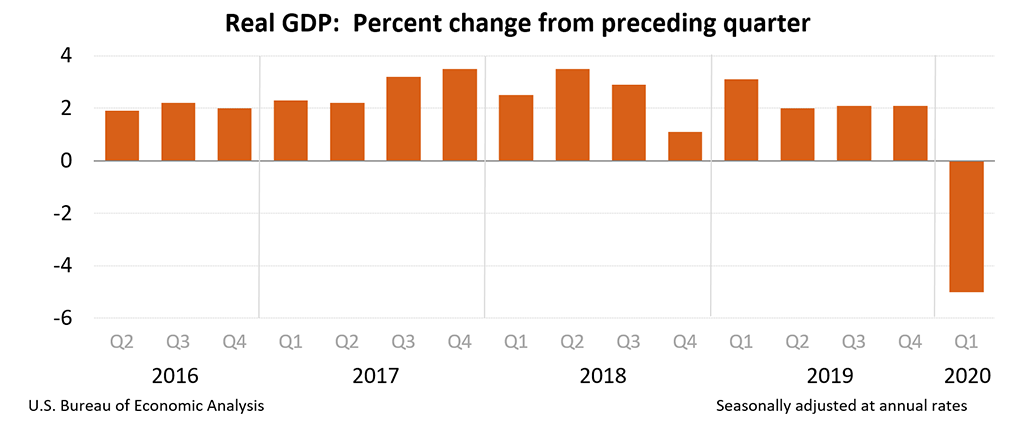
2. More GDP Growth. 'If Trump can deliver an average of more than 3% over his 4 years in office I think an impartial observer would agree the economy has done well.'

Didn't happen


3. A balanced Budget.
Didn't happen
"The budget deficit increased from $779 billion in FY2018 to $984 billion FY2019, up $205 billion or 26%. The budget deficit increased from $666 billion in FY2017 to $779 billion in FY2018, an increase of $113 billion or 17.0%.[10] The 2019 deficit was an estimated 4.7% GDP, up from 3.9% GDP in 2018 and 3.5% GDP in 2017. The historical average deficit is 2.9% GDP" 
4. Infrastructure improvements are a big part of Trumps promise. These are measured here
Didn't happen
2018 US was 14th in the world in world bank LPI rank. Infrastructure score 4.05
2016 US was 10th in the world. Infrastructure score 4.15

On none of the four metrics declared in January 2017 has Trump's presidency succeeded in, in the time before the pandemic.

Monday, May 18, 2020

Ireland really should make the Flu Vaccine Free for All

I argued here on February 21st that Ireland should make the flu vaccine free for all this year. This I argued because it would reduce overcrowding, increase productivity and mitigate some impacts of covid-19.

Today the minister for health has announced that more people will get the vaccine for free this year.


Defined at risk groups of adults is described here using 76 words. That is just too complicated. Many who qualify won't get vaccinated without clear messaging.
A simple message of "The flu vaccine is free for all this year. You can reduce the risk to you and spread in the community by getting vaccinated" would increase uptake even in the most at risk groups. The cost of expanding free vaccination to all, based on the experience of Ontario, would be about 60 million euro.

Flu compared to Covid-19 is a small issue. But it is one we have a fair amount of control over. Reducing the number of people having to go to hospital is really useful at the moment and free flu vaccines for all would do that.